
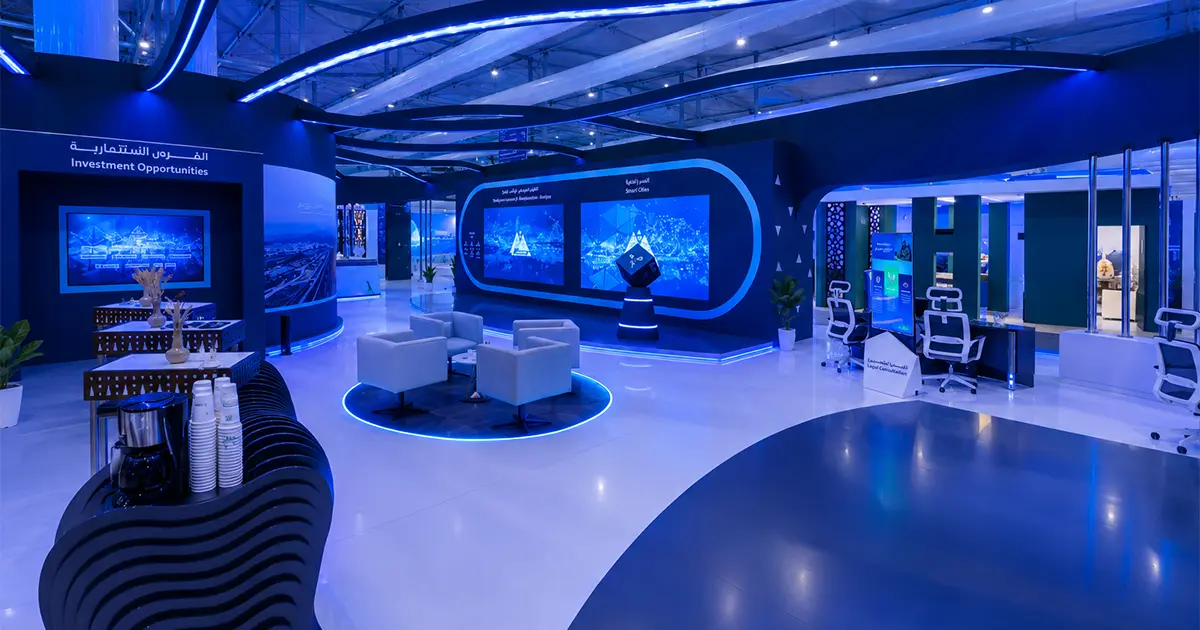
Trade show ROI measures whether the revenue and pipeline generated from an exhibition justify what you spent to be there. It's calculated as (revenue − investment) ÷ investment, but revenue alone rarely tells the full story. Footfall and total leads are easy to count and easy to feel good about, but neither confirms whether the show actually moved your business forward. Real measurement starts before the event, with clear objectives, and continues well after the booth comes down. Getting these numbers right starts before the show, with our exhibition and concept design services built around measurable outcomes, not just booth design
A busy booth looks like success. It isn't automatically one. Total leads collected include people who scanned a badge for a giveaway and never intended to buy. What actually predicts exhibition success is the quality of those leads, how many turn into real sales conversations, and how many eventually convert to revenue. Measuring exhibition success in Saudi Arabia means tracking what happens after the show, not just what happened on the floor.
Before committing budget to a stand, define what success looks like in numbers: a target number of qualified leads, meetings booked, or pipeline value. Vague goals like "raise brand awareness" are hard to act on unless you attach a proxy metric to them, such as website traffic or social engagement during the event window. Objectives set in advance are what let you calculate exhibition ROI honestly afterward, instead of retrofitting a success story to whatever numbers you happen to have.
The standard formula is:
ROI = (Revenue − Total Investment) ÷ Total Investment
Total investment covers stand design and build, travel, staffing, and marketing tied to the show. Revenue should only include deals genuinely traceable to the event, using CRM tagging, unique offers, or dedicated follow-up tracking. Revenue, profit, and pipeline aren't interchangeable: revenue is what closed, profit is what's left after costs, and pipeline is potential revenue still working its way through the sales process. For long B2B sales cycles, common in Saudi exhibitions targeting government and enterprise buyers, pipeline value is often the more realistic short-term measure, with revenue confirmed months later.
During the exhibition: track daily lead volume, meeting requests, and which conversations show genuine buying intent versus casual interest.
After the exhibition: follow up promptly, log every lead in your CRM, and track how many convert to opportunities, then to closed revenue, over the following weeks and months. Longer sales cycles mean the real ROI picture often only becomes clear well after the show ends.
Exhibition stand lead times: exhibitions here frequently mix government, enterprise, and international buyers with longer procurement cycles, so plan follow-up windows accordingly rather than judging success within days of the show closing.
What is a good trade show ROI?
It depends on the objective and sales cycle. Compare results against your own prior shows and stated goals rather than a fixed benchmark.
Is footfall a reliable success metric?
No. It shows interest but not quality. Qualified leads and pipeline value are stronger indicators.
How soon can I calculate exhibition ROI?
Immediate metrics like leads and meetings are available right away. Full ROI, including revenue, often takes weeks or months given typical B2B sales cycles.
What if my exhibition goal isn't sales?
Track a relevant proxy, such as qualified meetings, media coverage, or engagement, and set that target before the event.

.png )
.png )

.png )

.png )
.png )