
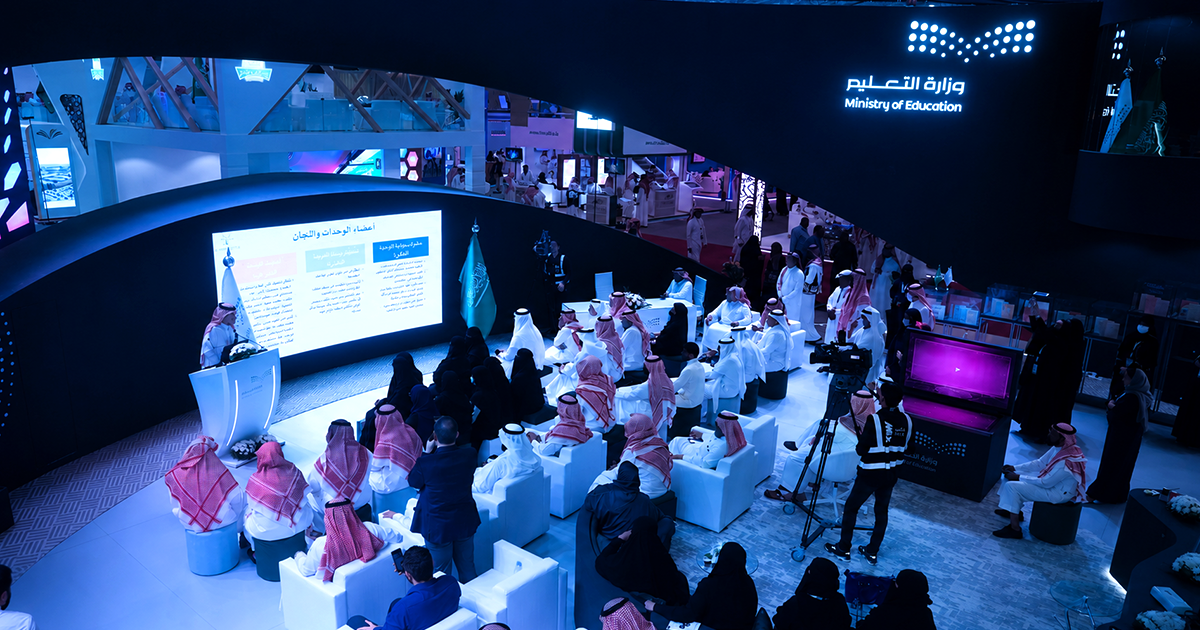
The event management industry in Saudi Arabia is one of the fastest-growing sectors in the Kingdom, driven by Vision 2030, increased investment in business events, international conferences, exhibitions, entertainment experiences, and large-scale government initiatives. The sector continues to expand as organizations seek professional event management services to deliver increasingly complex and high-profile events.
Event management in Saudi Arabia involves the planning, coordination, and execution of conferences, exhibitions, corporate events, government forums, product launches, and large-scale public events. Driven by Vision 2030, Saudi Arabia has become one of the fastest-growing event markets in the Middle East, with increasing demand for professional event management companies that can handle venue sourcing, production, logistics, permits, attendee management, and event operations.
Saudi Arabia's event management industry is one of the fastest-growing in the world. The professional event management market was valued at approximately USD 2.59 billion in 2025 and is projected to reach USD 3.92 billion by 2031. The broader MICE sector, covering meetings, incentives, conferences, and exhibitions, stood at USD 3.22 billion in 2025 and is forecast to reach USD 5.65 billion by 2031.
These are not numbers driven by a single sector or a single city. They reflect a structural shift in how Saudi Arabia positions itself as a destination for business, investment, knowledge exchange, and international events at scale.
For organisations planning conferences, corporate events, exhibitions, or forums in the Kingdom, understanding the industry landscape is not optional. It directly affects venue availability, planning lead times, supplier capacity, attendee expectations, and the decisions needed to execute well.
A decade ago, Saudi Arabia's professional events sector was a fraction of its current size. Large-scale conferences were the exception. International event organisers had a limited presence. Venue infrastructure outside Riyadh was sparse. The regulatory environment for entertainment and events was restrictive.
The shift began in 2016 with the announcement of Vision 2030 and the establishment of the General Entertainment Authority (GEA). What followed was one of the fastest transformations of a national events sector in recent history.
Exhibition capacity across the Kingdom grew 320% between 2018 and 2025, reaching over 300,000 square metres of dedicated space. The number of accredited event venues reached 923 by late 2025, a 32% year-on-year increase. The GEA has issued over 12,600 entertainment licences since its founding.
In 2024 alone, Saudi Arabia hosted over 8,500 entertainment and public events, including 85 full-scale international concerts, 240 sports tournaments, and more than 1,200 local cultural festivals, drawing a combined 68 million attendees.
The professional conference and business events side of the sector has matured alongside this growth. Global organisations, including Messe Frankfurt, Koelnmesse, MCH Group, and Oak View Group,p confirmed plans to open Saudi offices at the 2025 International MICE Summit, a clear signal of where international industry confidence now sits.
Vision 2030 is not just a backdrop to Saudi Arabia's economic growth. It is the direct cause of it.
The programme set out to reduce Saudi Arabia's dependence on oil revenue by building new economic sectors, including tourism, entertainment, sports, culture, and business, ts among them. The results in the events sector have been substantial.
Tourism targets reframed the event opportunity. Saudi Arabia surpassed its original Vision 2030 tourism target of 100 million visitors seven years ahead of schedule. In the first half of 2025 alone, the Kingdom welcomed 60.9 million visitors. Tourism spending reached SAR 161.4 billion in the same period. This volume of inbound travel creates direct demand for conferences, exhibitions, and corporate events.
Infrastructure investment followed the ambition. Giga-projects, NEOM, Qiddiya, the Red Sea Project, and Diriyah are not just construction projects. They are purpose-built environments that will host events at a scale and format that did not previously exist in the Kingdom.
GDP targets made events a strategic priority. Saudi Arabia has set a goal to increase the MICE sector's contribution to national GDP from 3.8% to 8.8% by 2030. That target shapes government investment, licensing policy, and venue development decisions.
Regulatory reform reduced friction. Regulatory reforms have streamlined market entry and licensing processes for foreign event organisers. Visa processes have been simplified. The licensing environment for professional events has become significantly more structured and accessible.
MICE is the professional core of Saudi Arabia's events industry, the segment that serves businesses, associations, governments, and international organisations.
Riyadh is the dominant event city. It captured approximately 52% of the national entertainment and events market in 2025. The concentration of government institutions, multinational regional headquarters, and major venues, alongside ongoing development of Qiddiya and Diriyah, makes it the first choice for most large-scale corporate and government events.
Jeddah is the fastest-growing event city, with the Western Region recording a 14.6% CAGR through 2035, according to market analysis. Its coastal setting, established hospitality infrastructure, and growing convention capacity make it particularly well-suited to international conferences and incentive events.
The Eastern Province, anchored by Dammam and Al Khobar, serves the energy sector and the large industrial and corporate community in the region. The completion of Aramco Stadium in Al Khobar in 2026 adds significant new event capacity on the eastern seaboard.
NEOM: remains a developing destination. As infrastructure comes online, its positioning as a next-generation destination will create new event formats and opportunities that do not yet exist elsewhere in the Kingdom.
AlUla: offers a genuinely distinctive event environment, a UNESCO-recognised heritage site that has attracted international cultural events and high-value incentive programmes. It is not a high-volume venue but is increasingly sought for events where destination experience is central to the objective.
The Saudi Arabian events market is not the same market it was three years ago. Organisations planning their first event in the Kingdom, or updating assumptions from a previous experience, need to account for several realities.
Venue demand has increased significantly. Top venues in Riyadh book 6 to 12 months in advance for prime dates. The growth in event volume has absorbed venue capacity faster than new supply has come online in some segments. Starting venue conversations early is not a recommendation; it is a necessity.
Attendee expectations have risen. The quality bar for conferences and corporate events in Saudi Arabia has increased alongside the broader growth of the sector. Attendees who regularly attend international events bring those standards with them. Hospitality quality, production values, F&B, and digital experience are all noticed.
Cultural considerations are operational requirements. Prayer times, gender arrangement planning, VIP protocol, hospitality standards, and language- these are not peripheral details. They are planning requirements that affect agenda structure, venue setup, staffing, and communications. See our [Conference Planning Checklist for Saudi Arabia (2026)] for a full operational framework.
Permits and approvals require a dedicated planning track. Requirements vary by event type, size, city, and attendee profile, and they have evolved as the sector has grown. Starting the approvals process late is one of the most common and costly mistakes in Saudi event planning. See our [Conference Permits & Approvals Guide for Saudi Arabia (2026)] for detailed guidance.
The supplier landscape is maturing but variable. The quality range between the best and worst suppliers in Riyadh is wider than in more mature markets. Vendor selection based on price alone is a consistent source of poor event outcomes. Professional event management relationships built through repeat business deliver access and pricing that first-time buyers cannot match.
Growth at this pace creates challenges alongside opportunities.
Venue pressure: Demand for premium event space, particularly in Riyadh, continues to outpace supply in certain categories. Multi-day conferences and events requiring flexible configurations face the most constraints.
Talent development: The rapid expansion of the sector has created demand for experienced event professionals that local supply has not fully caught up with. Saudi Arabia's investment in hospitality and events education is growing, but experienced talent remains a competitive resource.
Rising attendee expectations: The standard for what constitutes a well-executed event has increased. Organisations that managed events informally two or three years ago are finding that the same approach no longer meets attendee expectations.
Logistics complexity: Saudi Arabia's geography, multi-city event calendars, and the operational requirements of events with government participation create logistics complexity that requires dedicated planning capacity.
Sustainability expectations: Vision 2030's sustainability commitments are beginning to influence event planning requirements, particularly for government-adjacent events and international conferences where sustainability credentials are increasingly part of the brief.
The case for professional event management in Saudi Arabia is not primarily about convenience. It is about outcomes.
The complexity of planning a professional conference or exhibition in the Kingdom, across venues, permits, suppliers, cultural considerations, speaker management, and production, is significant. Organisations that attempt to manage this entirely in-house while maintaining their core responsibilities consistently encounter the same problems: late venue availability, permit delays, supplier coordination failures, and production quality below what the event requires.
Professional event management companies bring vendor relationships that reduce cost and improve access, current knowledge of regulatory requirements, production expertise, and the operational capacity to manage multiple planning tracks simultaneously.
For a detailed breakdown of what professional planning involves at each stage, see our [Conference Planning Checklist for Saudi Arabia (2026)].
The direction of Saudi Arabia's events industry is clear even without projections. The infrastructure investment is committed. The international companies entering the market have made public commitments. The tourism numbers that create the demand environment are already being delivered.
Expo 2030, hosted in Riyadh, will be a further catalyst, both for infrastructure development and for the consolidation of Saudi Arabia's position as a global events destination. The FIFA World Cup 2034 adds another long-term demand driver for venue development and international event capacity.
For organisations planning events in the Kingdom over the next several years, the opportunity is real and growing. So is the competition for the best venues, the best suppliers, and the best dates. The organisations that plan early, work with experienced partners, and treat Saudi Arabia's events market with the seriousness it deserves will consistently deliver better outcomes than those that don't.
What is the event management industry in Saudi Arabia?
Saudi Arabia's professional event management market was valued at approximately USD 2.59 billion in 2025 and covers corporate conferences, exhibitions, government events, MICE activities, product launches, and large-scale public events. It is one of the fastest-growing event markets in the world, driven by Vision 2030 investment and a significant expansion of venue infrastructure.
How has Vision 2030 impacted the Saudi events sector?
Vision 2030 has directly driven the growth of the events sector through tourism infrastructure investment, regulatory reform, new venue development through giga-projects, simplified licensing for foreign organisers, and a national target to increase the MICE sector's contribution to GDP from 3.8% to 8.8% by 2030.
Why is Saudi Arabia attracting international conferences?
Saudi Arabia's growing venue infrastructure, simplified visa processes, government investment in business events, improved air connectivity, and the concentration of regional headquarters in Riyadh have made it increasingly competitive as a destination for international association conferences and industry forums.
What is the MICE industry in Saudi Arabia?
MICE stands for Meetings, Incentives, Conferences, and Exhibitions. Saudi Arabia's MICE market was valued at USD 3.22 billion in 2025 and is forecast to reach USD 5.65 billion by 2031. It is the professional core of the events sector and the primary focus for international event companies entering the Saudi market.
What types of events are growing fastest in Saudi Arabia?
Exhibitions and trade shows are growing fastest in terms of physical infrastructure investment. Conferences and international forums are growing in terms of international participation. Corporate events and internal company events are growing as Saudi organisations invest more in employee engagement and professional communications.
What should organisations know before planning events in Saudi Arabia?
Plan early; venue demand is high and lead times are long. Understand permit and approval requirements for your specific event type. Account for cultural considerations in agenda and logistics planning. Select suppliers based on capability and relationships, not price alone. Work with a professional event management team that has current, active experience in the Saudi market.
Why hire a professional event management company in Saudi Arabia?
Professional event management companies deliver vendor relationships that reduce cost and improve access, current regulatory knowledge, production expertise, and the operational capacity to manage the complexity of events in the Saudi market. For most professional conferences and exhibitions, the value delivered exceeds the management fee.
Planning an event in Saudi Arabia? Mix events works with organisations across the Kingdom on conferences, exhibitions, corporate events, and forums of all scales. Get in touch to discuss your event.
References
Mordor Intelligence – Saudi Arabia Event Management Industry
Mordor Intelligence – Saudi Arabia MICE Industry
Travel Daily News – Saudi Arabia Reports 32% Annual Growth in Exhibition Capacity.
Meeting Media Group – Saudi Arabia Unveils Major Global Investments at IMS25
GlobeNewswire – Saudi Arabia Event Management Market Report 2026
Activation Nation – Saudi Entertainment Industry 2026
.png )
.png )
.png )
.png )
.png )