
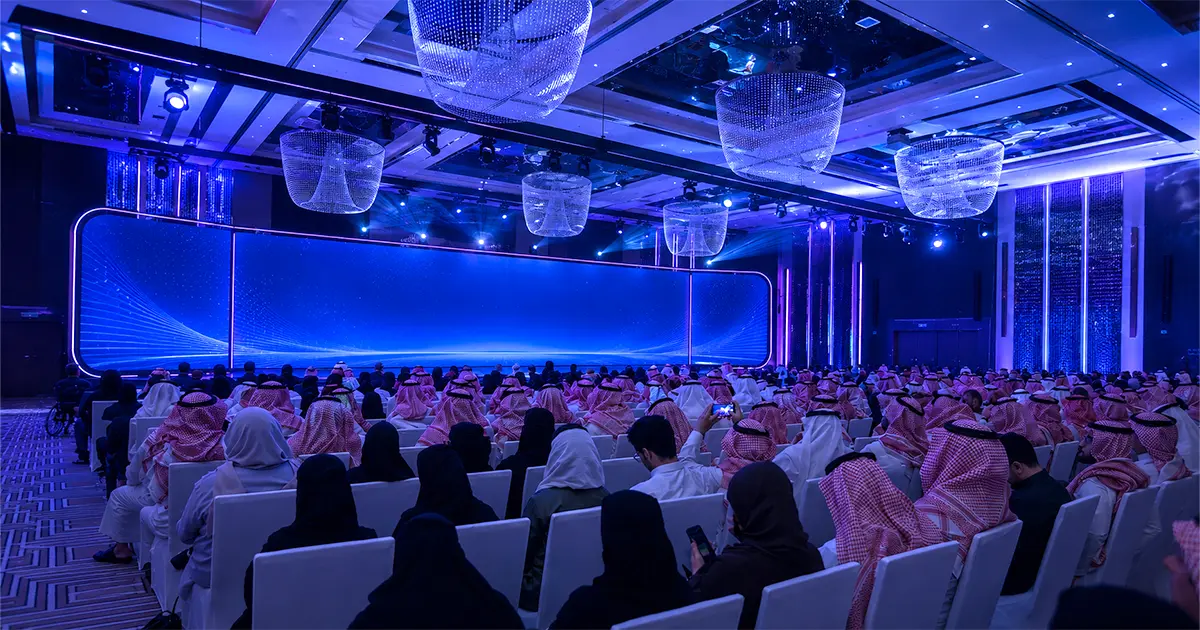
Choosing the right conference venue in Riyadh or Jeddah comes down to five factors: location, capacity, AV capability, total cost beyond the rental fee, and support spaces like breakout rooms and registration areas. Match these to your event's real objectives before you request proposals, and you avoid the two most common failures: undersized rooms and hidden costs that appear after signing. This guide walks through every decision point, from choosing a city to comparing final proposals.
Neither city is universally "better." The right choice depends on your audience and event goals. Full Riyadh vs. Jeddah conference comparison
Riyadh is the capital and the center of government, finance, and corporate headquarters. If your conference targets government stakeholders, ministries, financial institutions, or B2B corporate audiences, Riyadh gives you direct access to decision-makers without flight connections. Riyadh also has the deepest bench of large-scale conference infrastructure in the Kingdom, including purpose-built conference centers and international hotel brands with dedicated event floors.
Jeddah works better when your event has a strong international or regional Gulf attendee base, or when hospitality and destination appeal matter to your guests. Jeddah's coastal setting, established tourism infrastructure, and proximity to the Red Sea give it an edge for events where the destination itself is part of the value proposition, such as incentive conferences, regional forums, or events combining business with leisure.
Both cities offer strong hotel accommodation, but Riyadh has more inventory at the five-star corporate tier. Transportation and airport access are excellent in both cities, though Riyadh's ongoing infrastructure expansion means road access to newer venues should be checked in advance.
The practical answer: pick based on where your attendees are, what the event needs to achieve, and which city puts your audience in the room with the least friction.
Location. Proximity to airports, business districts, and attendee hotels reduces no-shows and late arrivals. A venue that looks perfect on paper but sits an hour from where your attendees are staying will hurt attendance.
Capacity and attendee count. Know your confirmed number, not your hoped-for number. Venues quote maximum capacity, but comfortable conference capacity is always lower once you add stage, AV, registration, and aisles.
Event duration. A half-day meeting has different room-turnover needs than a three-day conference with breakout tracks running in parallel.
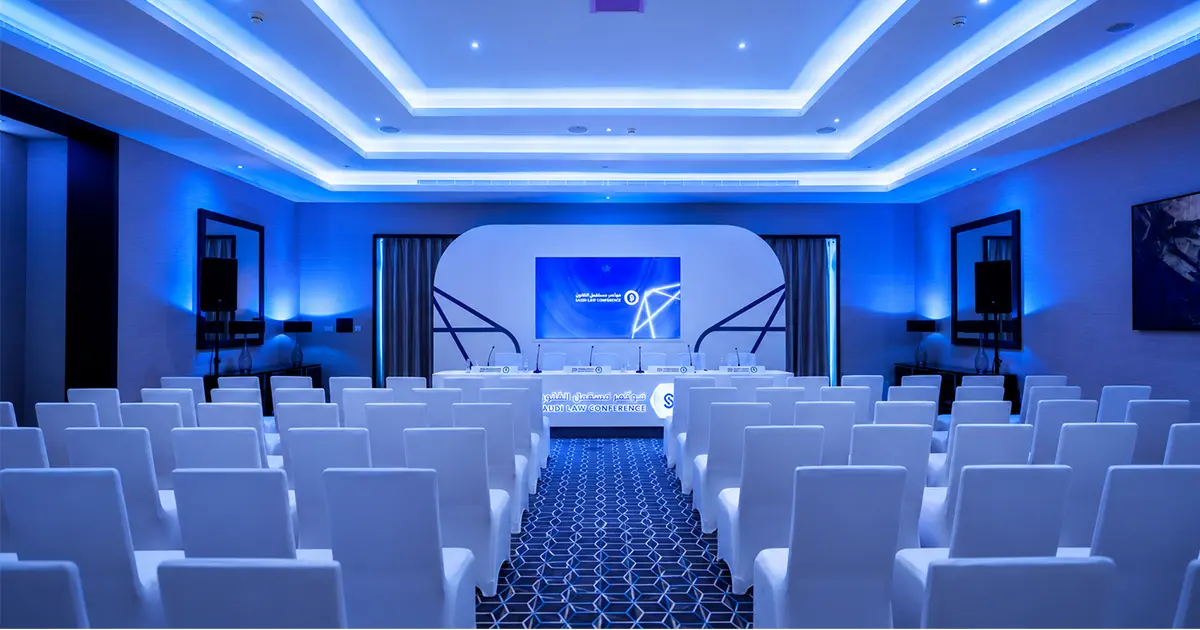
Seating arrangement. Theater, classroom, boardroom, and banquet layouts each consume different amounts of floor space for the same headcount.
Venue type. Hotels, standalone conference centers, and exhibition halls each suit different formats, covered in detail below.
AV requirements, LED screens, and stage production. Confirm what's built-in versus what you need to bring in separately.
Branding and signage. Ask what's permitted. Some hotel ballrooms restrict rigging, adhesive signage, or external branding installation.
Registration areas, breakout rooms, and networking spaces. These are frequently underestimated and are covered in their own section below.
Catering. In-house catering is usually mandatory at hotel venues; standalone venues may allow outside caterers.
Wi-Fi and internet bandwidth. Standard hotel Wi-Fi is rarely sufficient for live streaming, hybrid events, or large simultaneous device counts.
Accessibility, parking, and security. Confirm parking capacity for your expected attendee volume, accessibility provisions, and what security arrangements the venue requires or permits.
Transportation and logistics. Loading dock access, freight elevators, and unloading zones matter for any event with production equipment or exhibition booths.
Hotel venues offer convenience: in-house catering, accommodation for out-of-town attendees, and experienced event teams. The trade-off is less flexibility on branding, outside vendors, and sometimes AV packages.
Purpose-built conference centers are designed for large-scale events and typically offer stronger technical infrastructure and more flexible floor plans. They suit multi-day conferences and events with complex staging needs.
Exhibition halls work well for events combining a conference program with an exhibition or sponsor booths. They offer the largest floor areas but usually require you to bring in more infrastructure yourself.
Luxury venues suit smaller, high-touch events like executive forums, gala dinners, or VIP product launches where the venue itself reinforces brand positioning.
Standalone event venues give the most creative freedom for branding and layout but often require you to source AV, catering, and staffing independently, which increases coordination work.
There is no fixed market rate for conference venue rental in Riyadh or Jeddah. Prices vary by venue type, location, event date, duration, attendee count, and season. Anyone quoting a flat number without knowing your requirements is guessing.
What actually drives your total cost:
The number a venue first quotes you is the rental price, not the total cost of running your conference there. Build your budget around total cost, not the headline figure.
A venue's advertised maximum capacity assumes empty-room theater seating with no stage, no AV, and no aisles. Once you add a stage, screens, registration desk, and walking space, real capacity drops, sometimes by 20 to 30 percent.
Common layouts and where they fit:
Always ask for the room capacity specific to your chosen layout and your production requirements, not the venue's generic maximum figure.
AV is where quoted prices most often diverge from actual invoices. Confirm exactly what's included in the venue's base AV package: microphones, screens, projector, basic sound. Then confirm what's not included: confidence monitors, live streaming setup, hybrid event technology, LED walls, and additional lighting design.
Internet bandwidth deserves specific attention. Standard hotel bandwidth is built for guest room usage, not 300 attendees streaming or uploading simultaneously. If your event includes live streaming or a hybrid audience, request a dedicated bandwidth allocation and test it before the event date.
Power requirements matter for exhibition booths and production-heavy stages. Confirm available power points and capacity at the site inspection, not on event day.
Catering affects both cost and attendee experience. Coffee breaks, breakfast, lunch, and dinner each carry different per-person pricing, and timing affects room flow between sessions.
VIP catering and dietary requirements need to be flagged early. Venues can usually accommodate dietary restrictions, but only if notified with sufficient lead time. Guest flow matters too: a lunch service that bottlenecks at one buffet line for 200 people will eat into your afternoon session time.
The main conference hall is only part of the venue equation. Workshops, breakout sessions, speaker preparation rooms, VIP meetings, and media interviews all need dedicated space away from the main program.
Networking areas, sponsor zones, and exhibition booths also need floor space that's separate from the main seating. A venue that fits your main session comfortably but has no space for these supporting functions will create bottlenecks and a cramped attendee experience, even if the headline numbers look fine on paper.
Ask for a full line-item breakdown before signing, not just the headline rental figure. A written request for "all charges that could apply to our event, including overtime and access fees" should surface most of these before contract stage.
Comparing venues on rental price alone is the single most common procurement mistake in conference planning. Build a comparison table covering: venue rental, capacity at your required layout, catering per-person cost, AV package inclusions, internet, staffing, parking, setup and breakdown windows, branding permissions, breakout room availability, security requirements, overtime rates, and cancellation terms.
Once every proposal is normalized against the same line items, calculate a total estimated cost for each option. The venue with the lowest headline price is not always the lowest total cost.
Booking timelines depend on event size, complexity, and venue demand. A small executive meeting for 20 people can often be booked weeks out. A multi-day conference with production, breakout tracks, and VIP attendance typically needs several months of lead time to secure the right venue and negotiate favorable terms.
Seasonal factors matter in Saudi Arabia specifically. Ramadan changes catering timing and daily schedules. Public holidays and major national events compress venue availability. Summer months see different demand patterns than autumn and spring, which are peak conference seasons in both cities. Check our seasonal event planning guide. If your event includes government or institutional attendees, see our guide to organizing a government conference; factor in their own approval and scheduling timelines, which often run longer than corporate processes.
Choosing based only on appearance. A beautiful ballroom with poor acoustics or insufficient power capacity will undermine the event. Inspect for function, not just photos.
Choosing based only on price. The cheapest rental often carries the highest hidden costs.
Selecting insufficient capacity. Book for comfortable capacity at your chosen layout, not the venue's maximum theoretical number.
Ignoring traffic and parking. A venue with no confirmed parking allocation creates a bad first impression before the event even starts.
Forgetting breakout rooms. Confirm supporting spaces exist before signing, not after the main hall is booked.
Assuming AV is sufficient. Test it. Ask for a technical walkthrough, not just a features list.
Not checking Wi-Fi capacity. Request actual bandwidth figures, not marketing claims of "high-speed internet."
Ignoring setup and breakdown windows. Overtime charges accumulate fast when these aren't planned into the schedule.
Not conducting a site inspection. Photos and floor plans don't reveal acoustics, natural light, or actual walking distances between spaces.
Comparing incomplete proposals. Normalize every quote against the same line items before deciding.
Failing to negotiate. Most venues have flexibility on package inclusions, especially for multi-day bookings or off-peak dates.
Early planning gives you access to better rates and more venue options. Compare multiple proposals against the same checklist rather than negotiating with a single venue in isolation. Flexible dates, particularly avoiding peak weeks, often unlock better rates meaningfully.
Bundle services where possible. Venues frequently offer better packages when catering, AV, and room rental are negotiated together rather than separately. Choose the venue size that fits your actual attendee count. Paying for unused space is one of the most common budget leaks in conference planning.
Reducing cost and optimizing value are different goals. Cutting AV quality to save money can damage the attendee experience and undermine the event's purpose. The better approach is eliminating waste, unused space, redundant services, and unnecessary production, while protecting the elements that directly affect how attendees experience the event.
For a single small meeting, handling venue selection directly is manageable. For anything with multiple stakeholders, production requirements, or budget scrutiny, an experienced event management partner earns its fee back through better venue rates, tighter cost control, and fewer surprises on event day. Check our conference and forum management services
An event management company brings venue relationships that shorten the sourcing process, experience comparing proposals line by line, and the technical knowledge to assess whether an AV package actually meets your needs before you sign. Site inspections, vendor coordination, and risk management are easier to handle with a team that does this work continuously across Riyadh and Jeddah, rather than once a year internally.
The value isn't just time saved. It's fewer hidden costs, better negotiated terms, and a conference that runs the way it was planned to run.
A venue decision should follow from what the event is actually meant to achieve, not the other way around. A lead-generation conference needs strong networking space and sponsor visibility. An internal company celebration needs a different atmosphere than a government-facing forum. A product launch depends heavily on staging and branding flexibility.
Treat venue selection as one part of the broader event strategy, not a standalone line item. The right venue supports lead generation, brand awareness, employee engagement, and partner relationships. The wrong venue can quietly undermine all of them, even if the event otherwise runs smoothly.
Hybrid event formats are increasingly standard, which raises the bar for venue internet infrastructure and streaming-ready AV setups. AI-assisted event management tools are changing how registration, attendee data, and logistics get handled, which venues with modern technical infrastructure support more easily.
Sustainability considerations are becoming a factor in venue and catering decisions for corporate clients, particularly for international and multinational attendees. Attendee expectations around premium experience, from Wi-Fi quality to catering, continue to rise, which puts pressure on venues and event teams to deliver more than a room and a microphone.
How do I choose a conference venue in Riyadh?
Start with your confirmed attendee count and seating layout, then shortlist venues that comfortably fit that number with the AV, catering, and breakout space your event needs. Compare full proposals, not just rental price, before deciding.
What are the best conference venues in Riyadh?
The right venue depends on your event size, format, and objectives. Hotel venues suit corporate events needing accommodation and in-house catering, while purpose-built conference centers suit larger, technically complex programs.
What are the best conference venues in Jeddah?
Jeddah offers strong hotel venues and event spaces suited to international and regional audiences, particularly for events where destination and hospitality matter alongside the business program.
Is Riyadh or Jeddah better for conferences?
Neither city is universally better. Riyadh suits government, financial, and corporate-focused events with direct access to decision-makers. Jeddah suits events with strong international attendance or where destination appeal adds value.
How much does a conference venue cost in Riyadh?
There is no fixed rate. Cost depends on venue type, date, duration, attendee count, catering, and AV requirements. Request a full itemized quote rather than relying on a headline rental figure.
How much does a conference venue cost in Jeddah?
Pricing follows the same variables as Riyadh: venue type, season, catering, and production needs all affect the total. Compare full proposals rather than rental price alone.
What is included in a conference venue package?
This varies significantly by venue. Base packages typically include the room and basic AV, but catering, internet upgrades, additional rooms, and staffing are often quoted separately. Always request a full inclusions list.
What should I ask before booking a conference venue?
Ask about comfortable capacity for your layout, AV inclusions, catering details, internet bandwidth, setup and breakdown windows, parking, branding permissions, and all potential additional charges.
How can companies reduce conference venue costs?
Plan early, compare multiple proposals against the same checklist, stay flexible on dates, bundle services, and choose venue size based on actual attendee count rather than aspirational numbers.
How far in advance should businesses book a conference venue?
Larger and more complex events need several months of lead time. Factor in Ramadan, public holidays, and peak conference seasons, which affect venue availability in both cities.
Are event management companies worth the investment?
For events with multiple stakeholders or complex production needs, yes. The venue relationships, negotiation experience, and technical knowledge an experienced partner brings typically offset their fee through better rates and fewer costly surprises.
.png )
.png )

.png )
.png )
.png )